

Baidu unveils Apollo World model to enable AI to train AI in driving
Baidu has introduced Apollo World, a model in which AI agents simulate road traffic to train and test autonomous driving systems. It is already being used in Apollo Go trials.
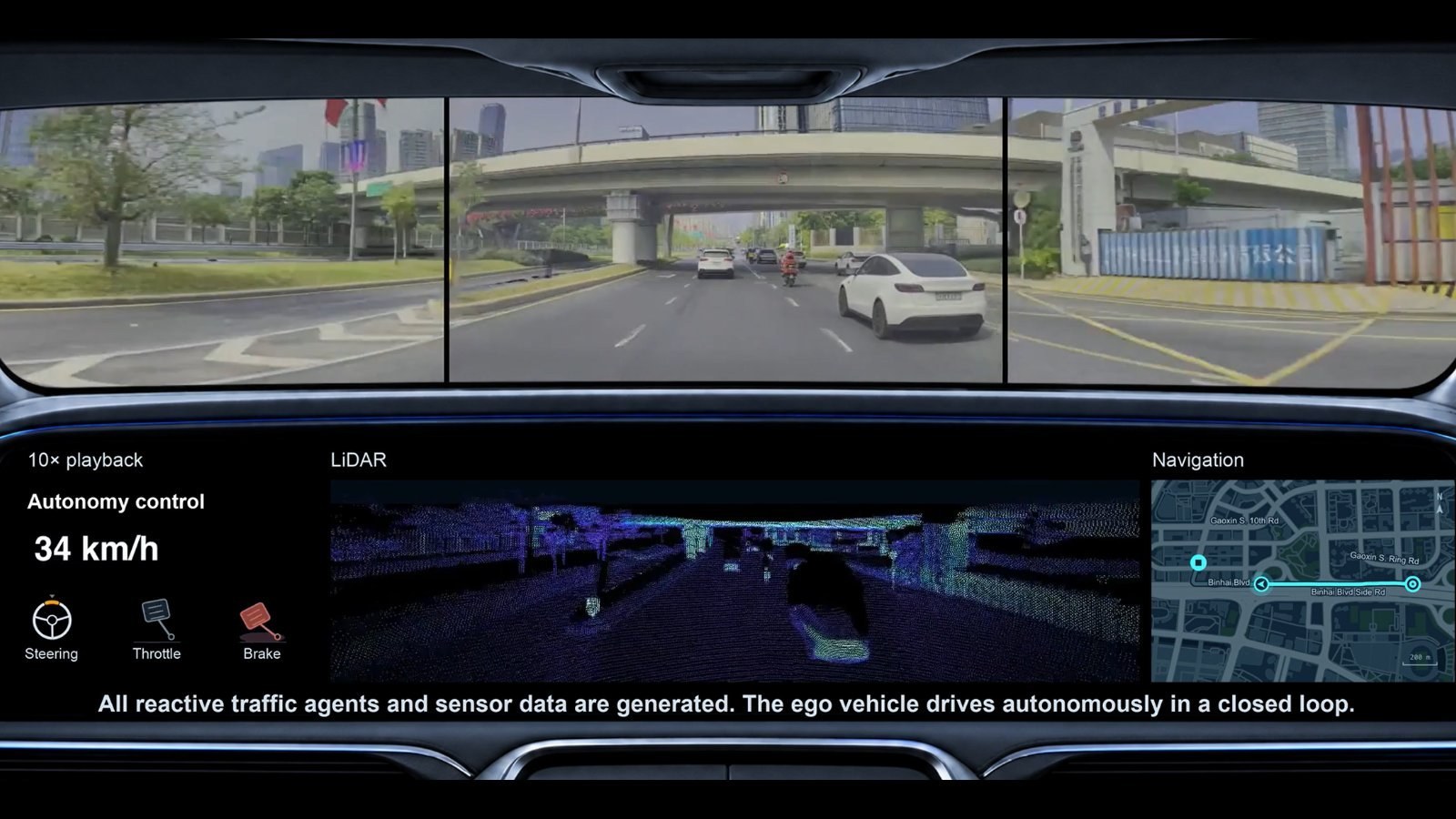
The model creates interactive virtual roads where self-driving cars can practice complete trips: accepting orders, picking up, and dropping off passengers. The company plans to use such scenarios before launching autonomous services in new markets to reduce costs and risks of real-world testing.
In Apollo World, cars, pedestrians, and other road users are represented by AI agents that make independent decisions and react to each other. For example, after a self-driving car slows down or changes lanes, other agents adjust their behavior. The model generates real-time camera images and lidar data, then updates the virtual environment after each system decision.
According to the company, the virtual distance covered by Apollo World in one day is roughly equivalent to three years of continuous driving by a real test vehicle with a safety driver. The model also extracts complex road situations and hazardous scenarios from operational data, turning them into repeatable tests for refining onboard systems.

Baidu’s Chief Architect of the Intelligent Driving Group, Wang Liang, stated that such models must replicate physical laws and cause-and-effect relationships, not just create realistic images. However, updated systems will still require road testing: the company did not disclose how much the technology has reduced testing costs or impacted safety.
Apollo Go operates in 28 cities worldwide. According to the company’s second-quarter report, the service’s total autonomous mileage has exceeded 350 million kilometers, including over 240 million kilometers of fully driverless driving.